KenBash.com
  • Home
  • BLOG
  • Essays/Op-Eds
    • Bosque County Romance
  • Bad Hemingway
  • Contact Ken
  • Home
  • BLOG
  • Essays/Op-Eds
    • Bosque County Romance
  • Bad Hemingway
  • Contact Ken

That Day in Dallas

1/24/2017

1 Comment

 
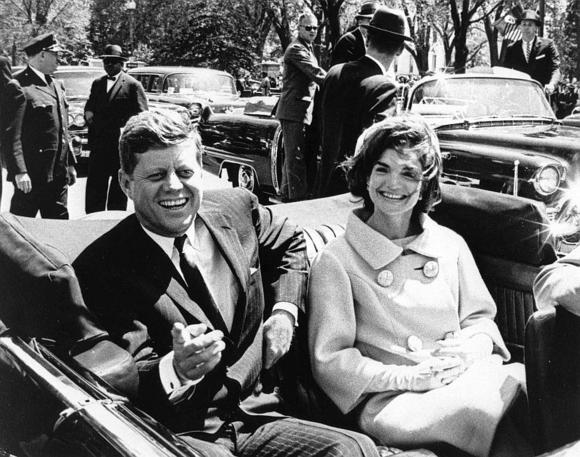
Picture
Friday, November 22, 1963

​

Perhaps everyone who was over the age of five at the time remembers the moment.

I was in Dallas, a seventh-grade student at Rylie Junior High School, playing basketball in my one o’clock P.E. class.
Our instructor, Mr. Stewart, strode into the gym with his head down, pensive and troubled. He blew his whistle and ordered us to assemble. In a minute we stood quietly facing him. We could tell that something was wrong. Someone had really messed up.
I have a permanent photograph of Mr. Stewart in my mind. I remember what he wore: white shirt, off-white sweater vest and slacks, white sneakers. His thinning blonde hair was slicked back.
“We heard on the news that President Kennedy has been shot,” he said. “Principal Guzick wants you all to report to your homerooms now. So you can change back into your clothes and go to your homeroom.”
While I would forever remember the scene, I could process little of the magnitude then. We all knew that President Kennedy was coming to Dallas that day, and I knew that people were stirred up over the fact that this Yankee president was visiting Texas, where, although it is not really considered a part of the Deep South, there was widespread hatred of him. In my 12-year-old mind, I understood that the president liked Negroes, and favored their equal rights, and that most people we knew did not.  I often heard him referred to as “the n___-lover.”
Almost all the students at our school, and the citizens in our small community on the outskirts of Dallas, were white. There were no African-Americans, and only a few Hispanics.
I liked the president. I liked it that he was young and handsome. Most politicians were old, fat and stodgy. I liked it that the president was athletic and smiling. I liked hearing him speak, and he seemed to care about people.
When I left the locker room and walked into the main school building, I encountered a bizarre scene: students were running through the hallways, cheering in jubilation, as if school had just been canceled forever. But it hadn’t. They were rejoicing at the shooting of the president, shouting cruel epithets. Just about everyone was taking part. I was shocked, and a little scared. A hidden meanness in these children had been revealed to me.
When I got to my homeroom, most of my classmates were at their desks. The room was silent except for occasional whispers of confusion and rumor. One girl wept softly, hiding her face. Our teacher stood by the door, worried and waiting for seats to fill.
I can only conjecture as to why my classmates were solemn, while most other pupils in our school were exuberant.  Of course, none of us knew much of national politics. We had mostly inherited our elders’ perspectives.
That evening, my parents and I sat at the kitchen table watching Walter Cronkite relay the details as they trickled in. My mother and father had lived through the Great Depression, so they were FDR Democrats. They might not have understood this man from Massachusetts, but they retained party loyalty. Ours was a Democratic household.
My mother, weeping, dropped her head and slowly pounded the table. “I love this country, and I love this president.”
My father, uncomfortable at the display of emotion, but caring and sympathetic, put his arm around his wife’s shoulder and squeezed her lightly. “All right, Mother.” He was tearing up, too. I had never seen my father cry.
Two days later, as we drove home from church, we were listening to live news. When Jack Ruby gunned down Lee Harvey Oswald in the basement of the Dallas police headquarters, we heard the shot live on our car radio. I can remember where we were on that country road when I heard the sound.
Sixty years later, our nation still bears the scars of these events, and struggles to understand. Few incidents in American history have been so thoroughly examined and dissected, and yet as time passes it seems the more uncertain we are as to what exactly happened that day in Dallas.
I can’t help but imagine how different our world would be had this great man not been taken from us.  Then I think of all the progressive leaders whose voices have been silenced through violence:  President Lincoln, Medgar Evers, Dr. King, Malcolm X, RFK, Karen Silkwood, Harvey Milk, John Lennon, Huey Newton, and yes, Paul Wellstone.  
And others who, had they lived, might have also helped to bend the arc of the moral universe toward justice.
May their teachings and principles be remembered forever, and inspire us to carry on.

#####

“The arc of the moral universe is long, but it bends toward justice.” –Dr. Martin Luther King, Jr., from Theodore Parker

#####

If you have a memory of that day you would like to share, please leave a Comment below. Thanks.
1 Comment
Jennifer
1/24/2017 05:46:56 pm

I remember the grownups being all solemn and serious. They sat on the couch and listened to the radio. My babysitter was weeping into a kleenex and then my father had to drive her home. I was glad I was too young to understand it.

Reply

Your comment will be posted after it is approved.


Leave a Reply.

    Welcome

    Feel free to leave a comment.

    Picture
    What President Obama should have said…

    Picture
    ​​​Time to Put Away Deadly Toys

    Picture
    Bad Hemingway  |  Big Too-Hardened Liver

    Archives

    January 2017
    October 2014

    Categories

    All

    RSS Feed

Powered by Create your own unique website with customizable templates.